
Segregation of Duties (SoD): meaning, importance and how to implement it

What is Segregation of Duties (SoD)
Segregation of Duties (SoD) is a fundamental principle of internal corporate controls designed to reduce the risk of fraud, errors and improper behavior.
The concept is simple but very powerful: a single individual must not have full control of a critical process from start to finish. Sensitive activities are therefore divided among different people or teams, so that every operation always requires a level of verification, approval or cross-collaboration.
In this way, a distributed control system is created that increases transparency and reduces the possibility of abuse.
Why SoD is crucial for enterprise security
Applying Segregation of Duties means introducing a structural security mechanism that makes it much more difficult to commit serious errors or fraud without being detected.
From an operational point of view, in fact, to carry out an illicit action it would be necessary to involve multiple individuals, dramatically increasing complexity and the probability of detection.
In IT and cybersecurity, this principle translates into role separation, strict privilege management and segmentation of system access. This results in stronger protection of three key elements: confidentiality, integrity and availability of data.
SoD is also closely linked to regulatory compliance, as it is often required or strongly recommended by standards and regulations such as
- ISO 27001,
- GDPR
- Sarbanes-Oxley Act (SOX).
Ready-Made Templates
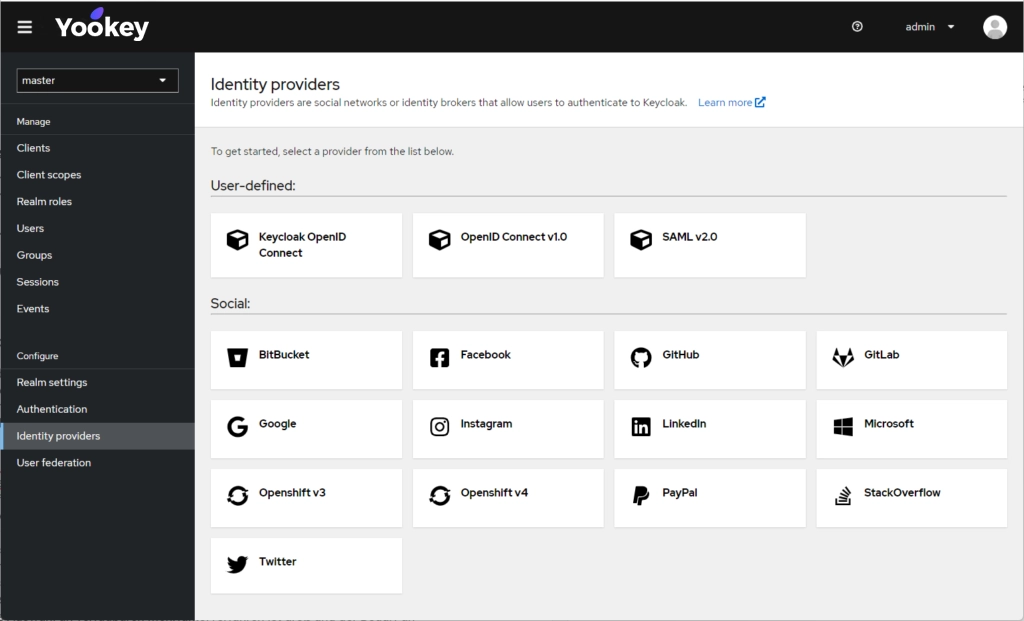
Are you looking for an IAM system?Visit the Yookey website to discover the available solutions.
Practical examples of Segregation of Duties
SoD is not a theoretical concept, but is applied every day in business processes.
- HR area: in human resources activities, functions are distributed so that the person processing payroll information does not coincide with the one approving or sending payments. In this way, it is avoided that a single person can modify and authorize an entire payslip.
- Finance area: the person who enters a supplier or records an invoice must not also have the power to authorize payment. This separation reduces the risk of fake suppliers or unauthorized transactions.
- IT area: in system administration, it is avoided that a single administrator has unlimited privileges over all functions. Critical activities are distributed and monitored, and in exceptional cases temporary tracked access is used to maintain control.
How to implement Segregation of Duties in an organization
The introduction of an effective SoD model requires a structured and continuous approach.
It starts from the analysis of processes and roles, identifying those that impact security, financial reporting and compliance (the scoping phase).
Next, separation rules are defined and a SoD matrix is built, highlighting conflicts between activities, roles and authorizations.
At this point it is essential to implement access approval workflows, so that every request is traceable and controlled.
Finally, SoD cannot be considered static: a continuous compliance approach is needed, with periodic access reviews and constant updates of rules based on organizational changes.
Key challenges in adopting SoD
In practice, implementing Segregation of Duties in an organization is not always simple.
One of the most common difficulties is the presence of overlapping roles or excessive privileges accumulated over time, which require complex remediation efforts and often impact operational processes.
Another frequent issue is the lack of adequate tools: many organizations still manage these controls manually, without structured workflows or governance systems, increasing the risk of errors and inefficiencies.
Finally, a significant critical issue is the lack of continuous audits. SoD cannot be verified only once: without periodic controls, role conflicts tend to reappear over time, undermining the initial work.
Integration between Yookey and YooPoint: IAM and IGA for SoD
In a modern enterprise architecture, Segregation of Duties cannot be managed only at the authentication or Identity Provider level. A more complete approach is needed that also includes identity governance.
In this scenario, the integration between Yookey and YooPoint enables the construction of a complete identity management model.
- Yookey (IAM): manage authentication, Single Sign-On, MFA and application role assignment.
- YooPoint (IGA): introduces the governance layer needed to control policies, risks and compliance.
Thanks to this integration it is possible to define Segregation of Duties rules centrally, automatically identify conflicts between roles and permissions, automate access review and access certification processes, and ensure compliance with standards such as ISO 27001, GDPR and NIS2.
Talk directly with our team for more information.